Turquoise Birthstone Month: December's Oldest Gemstone
Turquoise is the birthstone for December. Here is why it made the list, how it compares to zircon and tanzanite, and what to look for when buying a piece.
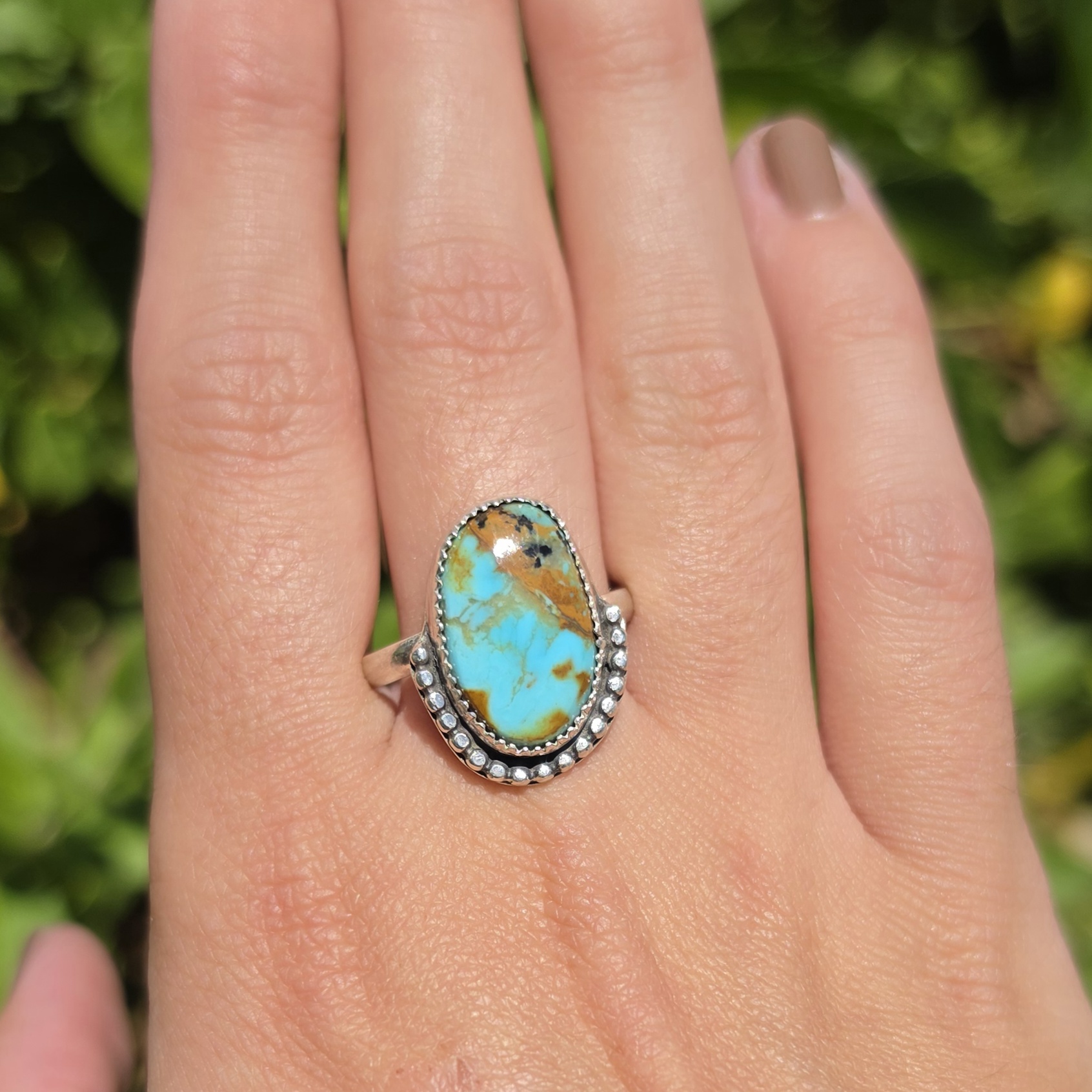
Turquoise is the birthstone for December. If that is all you came for, there it is — but the fuller answer is more interesting, because December is one of only a handful of months with more than one birthstone, and turquoise is by several thousand years the oldest stone on any birthstone list anywhere.
Most people searching for their turquoise birthstone month end up with three options and no idea how to choose between them. This covers where the December list came from, how turquoise stacks up against zircon and tanzanite, what the stone has traditionally meant, and — the part most birthstone articles skip entirely — how to tell good turquoise from the resin-soaked stuff that makes up most of what is sold as turquoise today.
Turquoise Birthstone Month: The Short Answer
The essentials, before we get into any of it:
- Month: December
- Companion stones: Zircon and tanzanite are also December birthstones on the modern list
- Traditional December list: Turquoise, zircon, and lapis lazuli
- Zodiac: Sagittarius (through December 21) and Capricorn (from December 22)
- Hardness: 5 to 6 on the Mohs scale — soft, and it matters
- Color range: Sky blue through teal to olive green
- Also marks: The eleventh wedding anniversary
- Traditional meanings: Protection, healing, good fortune, safe travel
Why Turquoise Is the December Birthstone
Birthstone lists feel ancient, and the underlying idea is. The usual origin story traces to the breastplate of Aaron described in the Book of Exodus — twelve stones for twelve tribes, later mapped by early scholars onto the twelve months of the year and the twelve signs of the zodiac. Which stone went with which month varied enormously by region and century. A list from 15th-century Poland looks nothing like one from Victorian England.
What we use now is far more recent and far more commercial. In 1912 the National Association of Jewelers, meeting in Kansas, standardized an official American birthstone list largely to stop jewelers from contradicting each other. Turquoise was on that original list for December, and it has stayed there through every revision since — one of the few stones never bumped.
The list has changed around it. Zircon was added to December in 1952. Tanzanite was added in 2002 by the American Gem Trade Association, only thirty-five years after the stone itself was discovered in Tanzania. Lapis lazuli appears on some traditional December lists and drops off most modern ones.
So when you look up your turquoise birthstone month, you are looking at a genuinely old stone sitting on a fairly young list. That gap is why the traditions around turquoise are so much richer than the ones around its December companions — people have been assigning meaning to it since roughly 5000 BCE, and assigning it to December since 1912.
The Three December Stones Compared
| Turquoise | Zircon | Tanzanite | |
|---|---|---|---|
| On the list since | 1912 | 1952 | 2002 |
| Color | Sky blue to green | Blue, colorless, brown, red | Violet-blue |
| Hardness (Mohs) | 5–6 | 6–7.5 | 6–7 |
| Typically treated? | Usually stabilized | Blue is heat-treated | Almost always heat-treated |
| Source | US Southwest, Iran, China | Cambodia, Sri Lanka, Australia | One area of Tanzania |
| Everyday wear | With care | Yes, but chips | Not ideal — cleaves |
| Price range | $20 to thousands | Moderate | High and rising |
The practical read: tanzanite is the luxury pick and comes from a single deposit that will eventually run out. Zircon is the underrated one — genuinely brilliant, badly confused with cubic zirconia, which it has nothing to do with. Turquoise is the one with history, the widest price range, and by far the most character, because no two stones are alike.
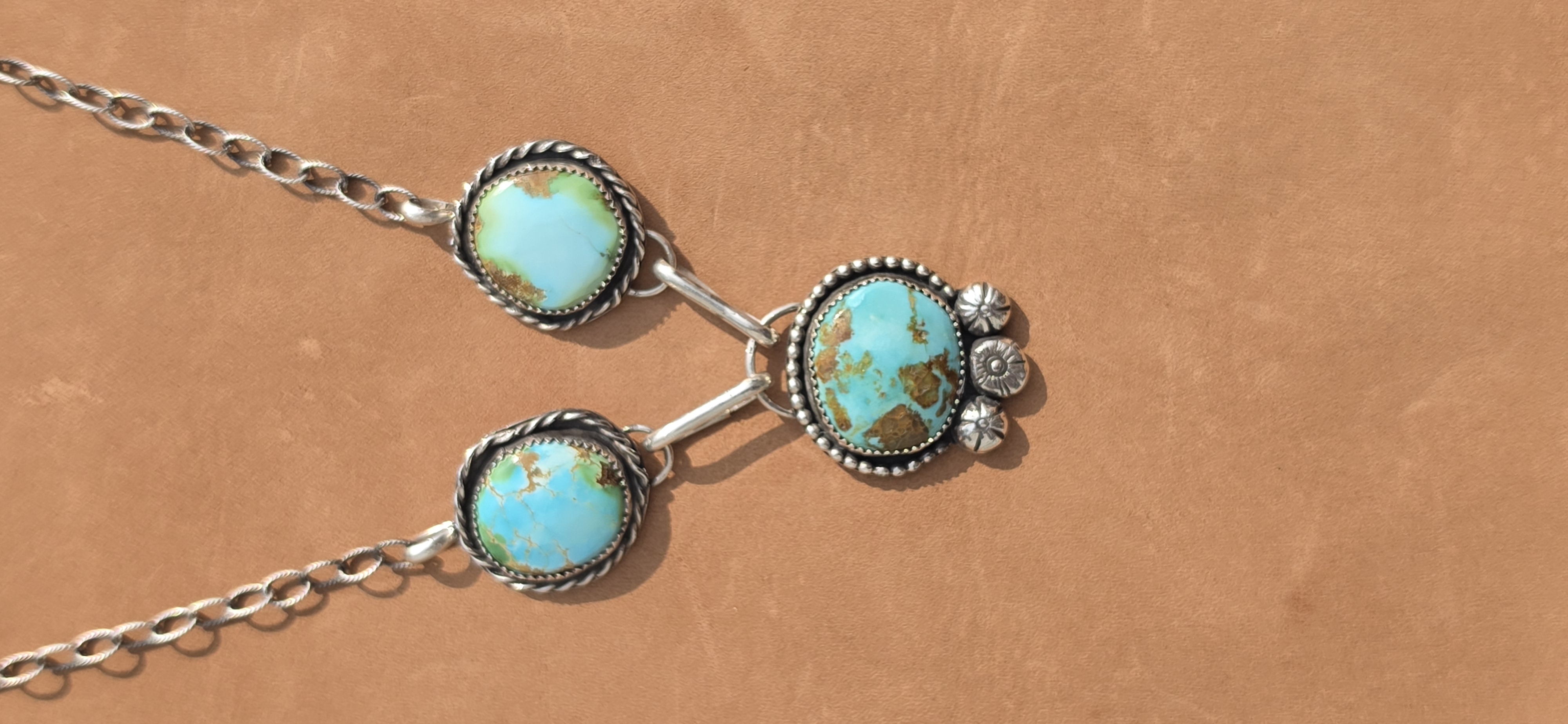
What Turquoise Means as a Birthstone
Every culture that has mined turquoise landed on roughly the same meanings: protection, healing, and good fortune. Persian riders set it into bridles believing it protected horse and rider from a fall. Egyptians associated it with Hathor and buried it with their dead. In the American Southwest it is called the sky stone, and Navajo, Zuni, Hopi, and Pueblo traditions connect it to rain, water, and life in country that has very little of any.
For a December baby, the protective association is the one that tends to resonate — particularly the travel piece, since it was historically given to people leaving home. If you want the full history, we covered it in depth in our piece on what turquoise means.
There is also a persistent Southwestern tradition that turquoise carries more weight when it is given than when it is bought for yourself. Convenient, given that this is a birthstone.
Where December’s Turquoise Actually Comes From
This is where turquoise separates itself from every other birthstone. Tanzanite comes from one place. Turquoise comes from dozens, and the mine name is part of what you are buying — the way an appellation works with wine.
- Kingman (Arizona) — one of the longest continuously producing American mines. Strong blue, often with black or golden spiderweb matrix. The workhorse of the Southwest jewelry trade.
- Sleeping Beauty (Arizona) — the famous clean sky-blue with little to no matrix. The mine stopped producing turquoise in 2012, which is why prices on it have climbed hard and why so much fake “Sleeping Beauty” is on the market.
- Royston (Nevada) — known for stones that run blue and green in the same piece, with heavy brown matrix. Distinctive enough that experienced buyers can often spot it across a room.
- Bisbee (Arizona) — deep blue with reddish-brown matrix, from a copper mine that stopped turquoise recovery in the 1970s. Old stock only, priced accordingly.
- Morenci (Arizona) — blue with irregular pyrite flecks that look like silver flashes in the stone.
- Persian / Iranian — the historical benchmark, uniform robin’s-egg blue, still mined near Neyshabur.
If you are buying a December birthstone piece at any real price point, the seller should be able to tell you the mine. A seller who cannot, or who says only “natural turquoise,” is telling you something.
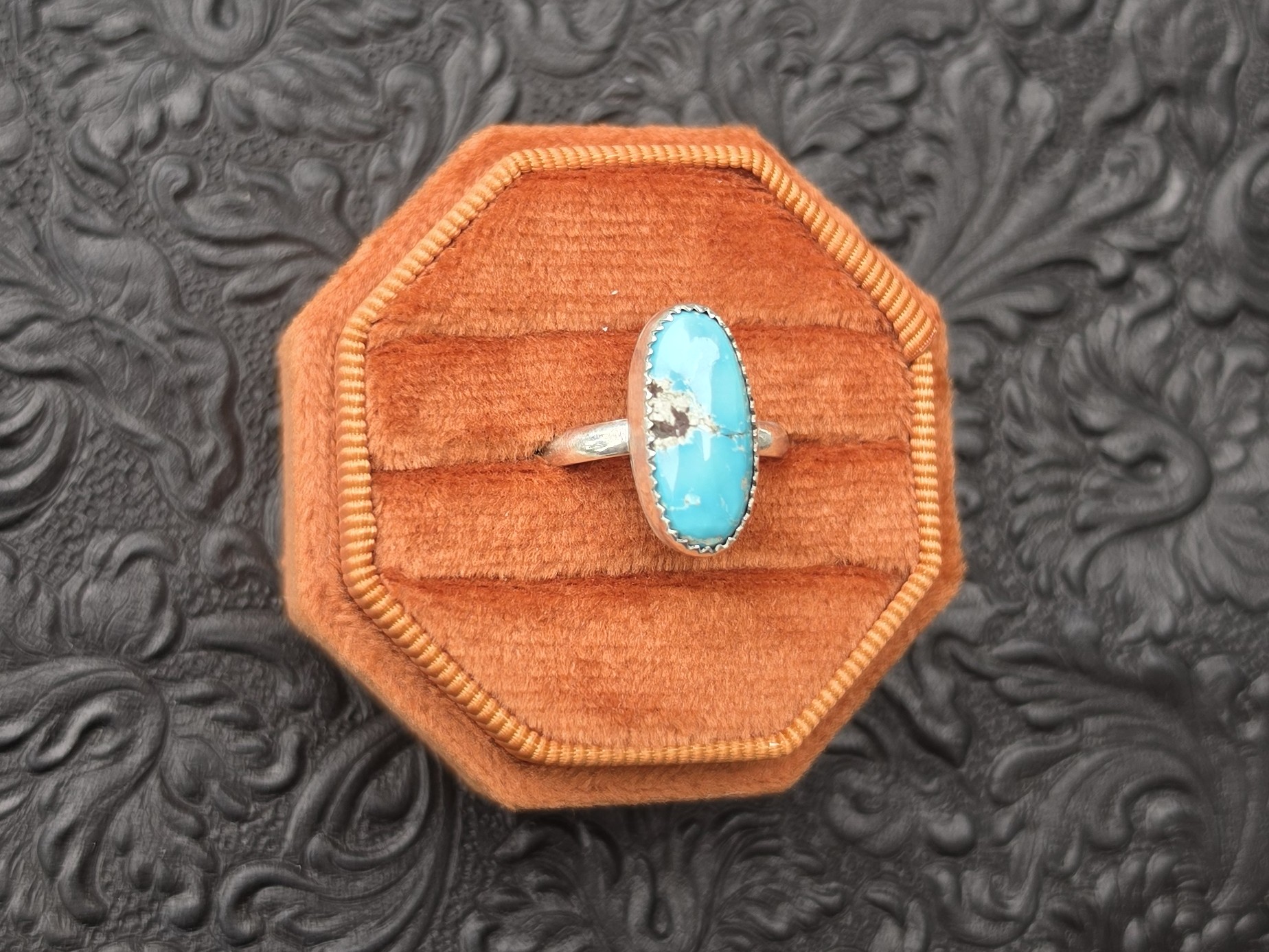
Choosing Turquoise Birthstone Jewelry
Here is the thing nobody mentions in birthstone guides, and it is the single most useful thing to know before you spend money: the large majority of turquoise on the market has been altered, and there are three very different categories hiding behind the same word.
Natural, Stabilized, and Block
Natural turquoise is cut and polished, nothing else. It is maybe 10 percent or less of what is sold. Hard, high-grade natural turquoise takes a polish on its own and holds its color for decades. It is expensive and worth it.
Stabilized turquoise is real turquoise — genuine stone from a genuine mine — that has been pressure-impregnated with clear resin to harden it and lock in the color. Most turquoise coming out of the ground is too soft and chalky to cut otherwise. Stabilized is not a dirty word; it is an honest and very common treatment, it wears better than soft natural stone, and it should simply be disclosed and priced accordingly.
Block, reconstituted, or “howlite” turquoise is not turquoise. Block is dyed plastic or resin. Reconstituted is turquoise dust glued into a slab and cut. Dyed howlite and dyed magnesite are other white minerals colored blue. All of it turns up on marketplaces labeled as turquoise, and all of it is worth a few dollars.
The GIA’s turquoise reference is a good neutral resource if you want to dig into identification further.
What to Look For
- Ask what the stone is and where it came from. A straight answer about mine and treatment is the strongest signal you will get about a seller.
- Look at the matrix. The host rock webbing through the stone is a fingerprint. Dead-uniform color across a whole piece at a low price usually means block.
- Check the back of the setting. Quality Southwest work leaves the back of the stone visible or has clean, deliberate metalwork. A stone fully sealed in glue is a warning sign.
- Weigh it. Real turquoise has heft. Plastic block feels light and warms up too quickly in your hand.
- Price sanity-check. A large clean sky-blue Sleeping Beauty cabochon for $30 does not exist. That mine closed.
- Buy sterling, not plated. A turquoise piece you intend to keep deserves a setting that will outlive the trend. Anything marked 925 is sterling.
You can see how this plays out on real pieces in our turquoise collection — every stone we set is identified by mine and treatment on the product page, which is the standard the whole category should be held to.
A Turquoise Birthstone Month Gift Guide
December birthdays get shortchanged and everyone with one knows it. A few notes on buying turquoise as a birthstone gift specifically:
Under $75 — Studs or small drop earrings in sterling with stabilized stone. A simple pendant on an 18-inch chain. These are the pieces that get worn daily, and daily wear is the whole point of a birthstone.
$75 to $200 — A ring with a decent single cabochon, or a narrow stamped cuff. This is the sweet spot where you start getting identified mine stone and real silversmithing rather than commodity settings.
$200 and up — Larger statement cuffs, multi-stone work, high-grade natural stone from a named mine. At this level you are buying a piece that appreciates rather than depreciates, particularly anything with old-stock Bisbee or Sleeping Beauty in it.
For the recipient who already owns turquoise — Go for a different mine than what they have. Someone with Sleeping Beauty blue will notice a green Royston piece as a genuinely different object rather than a duplicate.
Sizing note — If you are buying a ring and guessing, size up rather than down. Turquoise rings are frequently harder to resize than plain bands because heat and the stone do not get along, and a loose ring can be sized down more safely than a tight one can be opened up.
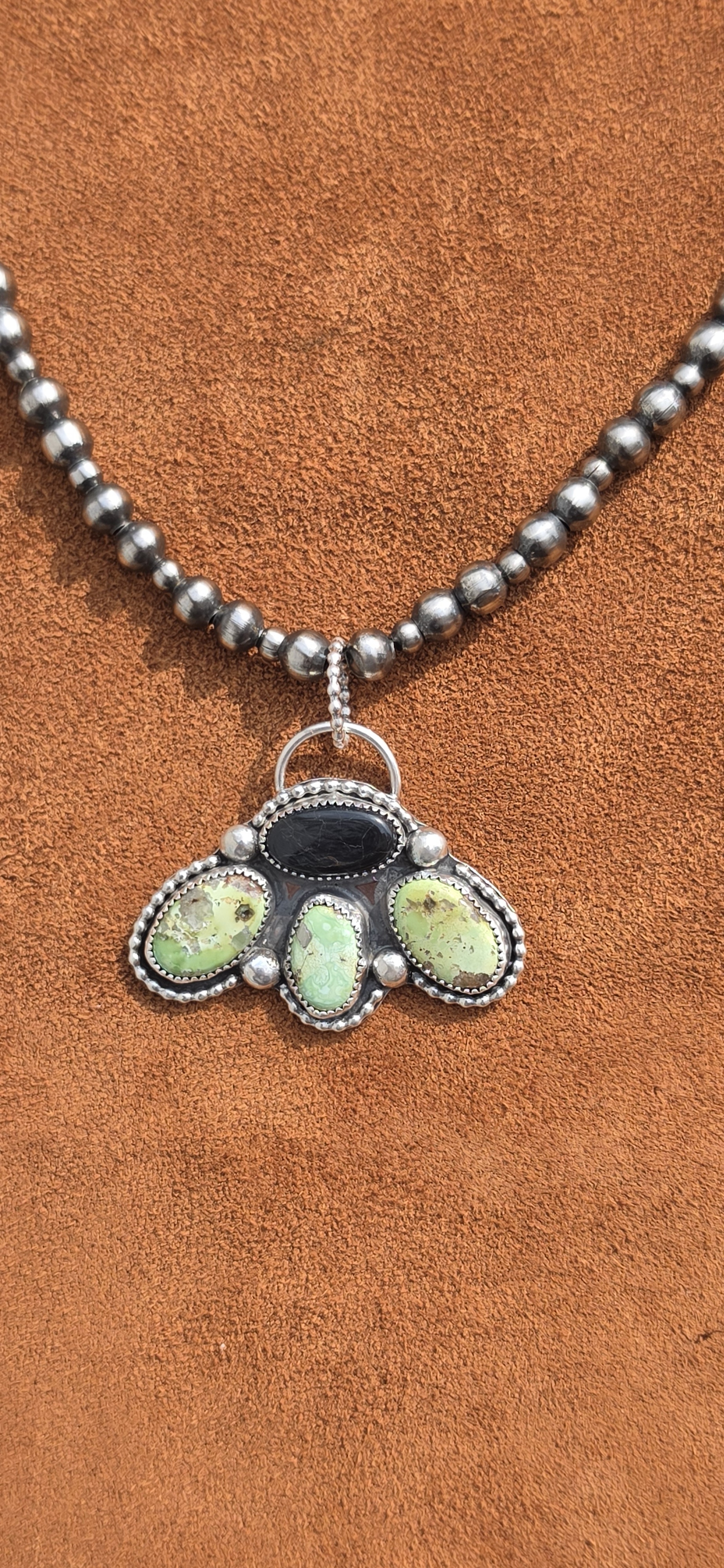
Caring for Turquoise Birthstone Jewelry
Turquoise sits at 5 to 6 on the Mohs hardness scale. For comparison, diamond is 10, sapphire is 9, and window glass is about 5.5. Your birthstone is roughly as hard as a pane of glass, and it is porous on top of that. It will absorb whatever touches it.
That porosity is not a defect — it is the reason old turquoise turns green. The stone drinks up skin oils, lotion, and moisture over years and shifts color as it goes. Persian tradition read that color change as the stone warning its wearer of danger. It is really just absorption, but a fifty-year-old ring that has gone soft green is the most honest object in anyone’s jewelry box.
Do:
- Put jewelry on last, after lotion, perfume, sunscreen, and hairspray have fully dried
- Wipe the stone with a dry soft cloth after wearing
- Store pieces individually so harder stones cannot scratch the turquoise
- Take rings off before gardening, dishes, gym equipment, or anything with grit
- Polish only the silver, keeping the cloth off the stone
Don’t:
- Soak turquoise or run it under a tap
- Use silver dip, jewelry cleaner, ultrasonic cleaners, or steam — any of these can destroy a turquoise piece in one pass
- Wear it in a pool, hot tub, or ocean
- Use abrasive polish or baking soda anywhere near the setting
- Leave it in a hot car or on a sunny windowsill, which fades color
If the silver around the stone has gone dark, that is a separate and very fixable problem — our guide on keeping sterling silver from tarnishing covers how to do it without wrecking the stone in the process.
Turquoise Beyond the Birthstone Month
Two other occasions where turquoise is the traditional stone, which makes a December birthday piece do double duty:
The eleventh wedding anniversary. Turquoise is the traditional gemstone, and the symbolism is friendship and enduring bond rather than romance or passion. It is a more thoughtful gift than it first sounds.
Graduations, moves, and departures. This one is not on any official list, but it follows directly from the oldest meaning the stone carries. Turquoise was given to people going somewhere. If you know someone leaving for school or a new city, the tradition is right there waiting to be used.
A December birthstone that has been mined for seven thousand years, comes from named mines you can actually trace, and picks up the history of whoever wears it is a better inheritance than most stones offer. If you are shopping for a December birthday — yours or somebody else’s — the stone to start with is the one you keep looking back at.
Frequently asked questions
What month is turquoise the birthstone for?
Turquoise is the birthstone for December. It has held that spot continuously since the standardized American birthstone list was established in 1912.
Does December have more than one birthstone?
Yes. The modern list gives December three: turquoise, zircon, and tanzanite. Traditional lists pair turquoise with zircon and lapis lazuli. You are free to pick whichever you like — none is more official than the others in any binding sense.
Is turquoise the traditional or modern December birthstone?
Both. Turquoise appears on the traditional and the modern lists, which is unusual. Tanzanite is modern only, added in 2002.
What does the turquoise birthstone symbolize?
Protection, healing, and good fortune, with strong historical ties to safe travel and to water and rain. In modern practice it is also associated with clear, honest communication.
Is turquoise good for an everyday ring?
With realistic expectations, yes. It is soft and needs to come off for manual work, water, and cleaning products. Plenty of people wear turquoise rings daily for decades — those rings just look like they have been worn, which most owners consider the point.
How can you tell if a turquoise birthstone is real?
Ask the seller for the mine and the treatment. Real stone has weight, a matrix pattern that is irregular rather than repeating, and a price that reflects its grade. Dyed howlite and plastic block are the common substitutes, and both are light in the hand and suspiciously uniform in color.
What is the difference between blue and green turquoise?
Chemistry. Copper content pushes the stone blue, iron pushes it green. Both are equally real turquoise. Blue generally sells for more, but green stones from mines like Royston have a serious following.
Is turquoise expensive?
It spans a wider range than almost any other gemstone. Stabilized stone in a simple sterling setting starts around $20 to $40. High-grade natural stone from a closed mine like Bisbee runs into the thousands per carat. Most good wearable pieces land between $75 and $250.
