Turquoise Meaning: Symbolism, History, and Why It Is Worn
Turquoise has meant protection, water, and good fortune for nearly 7,000 years. Here is where those meanings come from and what the stone symbolizes today.
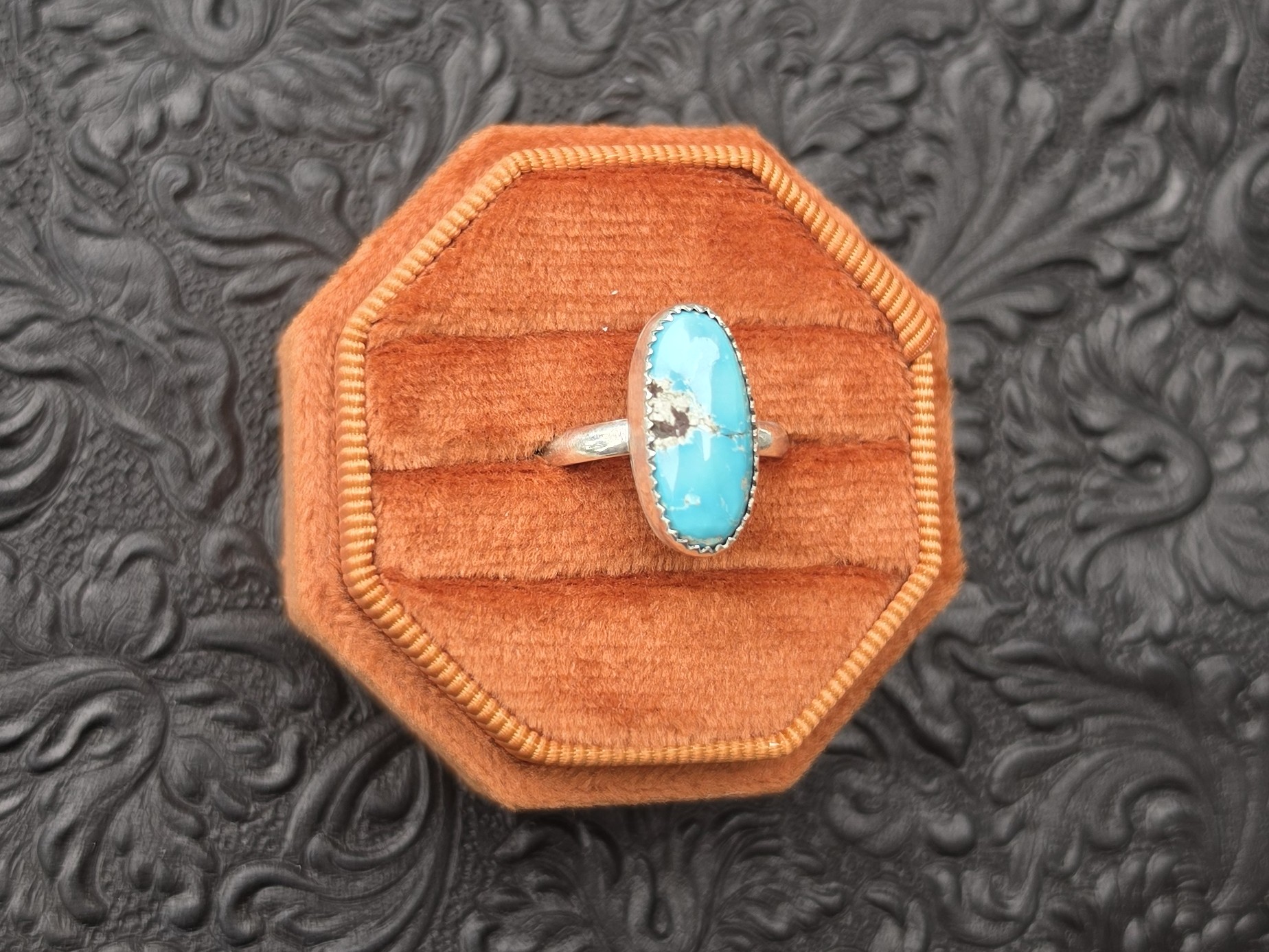
Across almost every culture that has ever mined it, turquoise means the same three things: protection, healing, and good fortune. It is one of the oldest stones people have bothered to dig out of the ground and wear, and the meanings attached to it have stayed remarkably consistent for close to 7,000 years — from Egyptian tombs to Persian horse bridles to a silversmith’s bench in New Mexico.
The reason is probably simpler than any of the mysticism suggests. Turquoise is the color of water and the color of sky, and it turns up in some of the driest country on earth. When you find something that looks like rain in the middle of a desert, you tend to decide it means something.
What turquoise symbolizes
The core associations, which show up independently in cultures that never traded with each other:
- Protection — particularly for travelers, riders, and anyone leaving home
- Water and rain, and by extension life and abundance
- Healing, especially of the body’s overall vitality rather than one specific ailment
- Truth and clear speech — a newer association, but a persistent one
- Friendship and lasting bonds, which is why it shows up so often as a gift
The sky stone
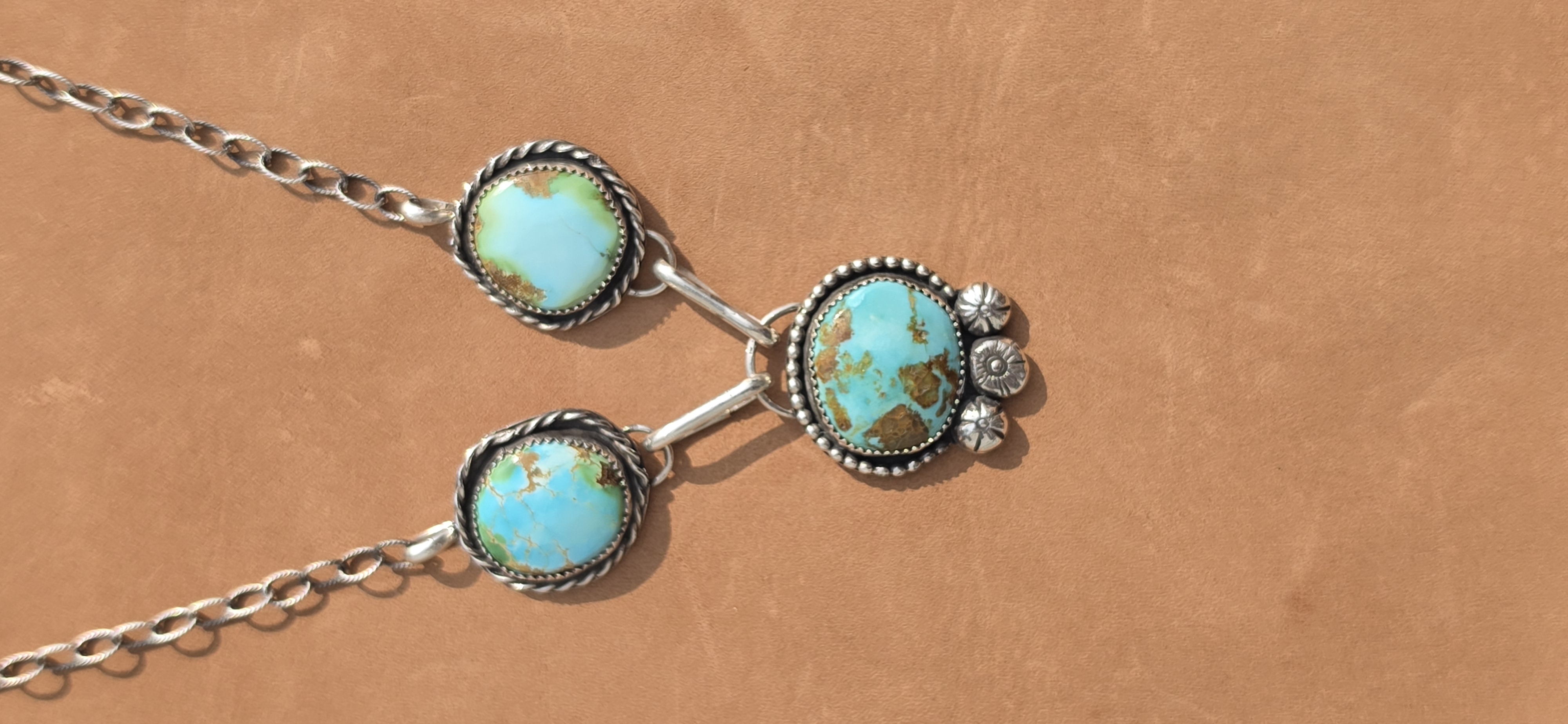
In the Southwest, turquoise is often called the sky stone — a piece of sky that fell to earth. That framing is central to how Navajo, Zuni, Hopi, and Pueblo peoples have used it for well over a thousand years, long before silver ever entered the picture. Silver came to the Southwest in the mid-1800s; turquoise was being carved, drilled, and traded there by 200 BCE.
Turquoise was ground and offered to bring rain. It was set into fetishes and worn by hunters, and Apache tradition held that it steadied a bow-hand and improved aim. Zuni tradition assigns meaning to the color itself: blue turquoise belongs to the sky and the father, green to the earth and the mother.
It was also currency, in the practical sense. Turquoise from mines in what is now Nevada, Arizona, and New Mexico traveled as far as central Mexico along trade routes, and Chaco Canyon has yielded tens of thousands of worked turquoise pieces. This was never only a decorative stone.
A note worth making, since this is a jewelry site: genuine Native American work carries meaning that mass-produced Southwest-style jewelry does not, and the two get deliberately blurred by a lot of sellers. If a piece is described as Native American made, it should come with the artist’s name.
Persia, Egypt, and where the name comes from
The oldest turquoise jewelry we know of came out of Egypt — beads dated to roughly 5000 BCE, and later the elaborate inlay work in Tutankhamun’s burial mask. Egyptians associated it with Hathor, sometimes called the Lady of Turquoise, and mined it hard in the Sinai.
Persia is where turquoise became a stone of protection and victory. The Persian name, firuzeh, is related to the word for victory. Persians set turquoise into daggers, bridles, and tack, believing it protected both horse and rider from a fall — one of the earliest and most specific versions of the protection meaning. There was also a widely held belief that the stone changed color to warn its wearer of danger or illness, which, as it happens, is not entirely superstition. More on that below.
The English name arrived by accident of trade. Persian turquoise reached Europe through Turkish markets, so the French called it turquois — Turkish stone. The meaning had nothing to do with the stone and everything to do with the middleman.
What the color means
Turquoise runs from bright robin’s-egg blue through teal to a deep olive green, and the shift is straightforward chemistry. Copper in the stone pushes it blue. Iron pushes it green. GIA’s overview of the species goes deeper if you want the mineralogy.
Which shade is “best” is mostly a market preference rather than a meaning. Sky-blue Sleeping Beauty and Persian turquoise command the highest prices, while green Royston and the spiderwebbed stones have their own devoted following. Neither is more authentic.
The old Persian belief about color-changing turquoise has a real basis. Turquoise is porous, and it absorbs oils, lotions, and moisture from skin over years of wear. A blue stone genuinely does drift greener the longer it is worn. Ancient wearers read that as the stone responding to its owner. We would call it absorption — but the observation was accurate, and it is also why turquoise needs different care than a diamond.
December’s birthstone, and the eleventh anniversary
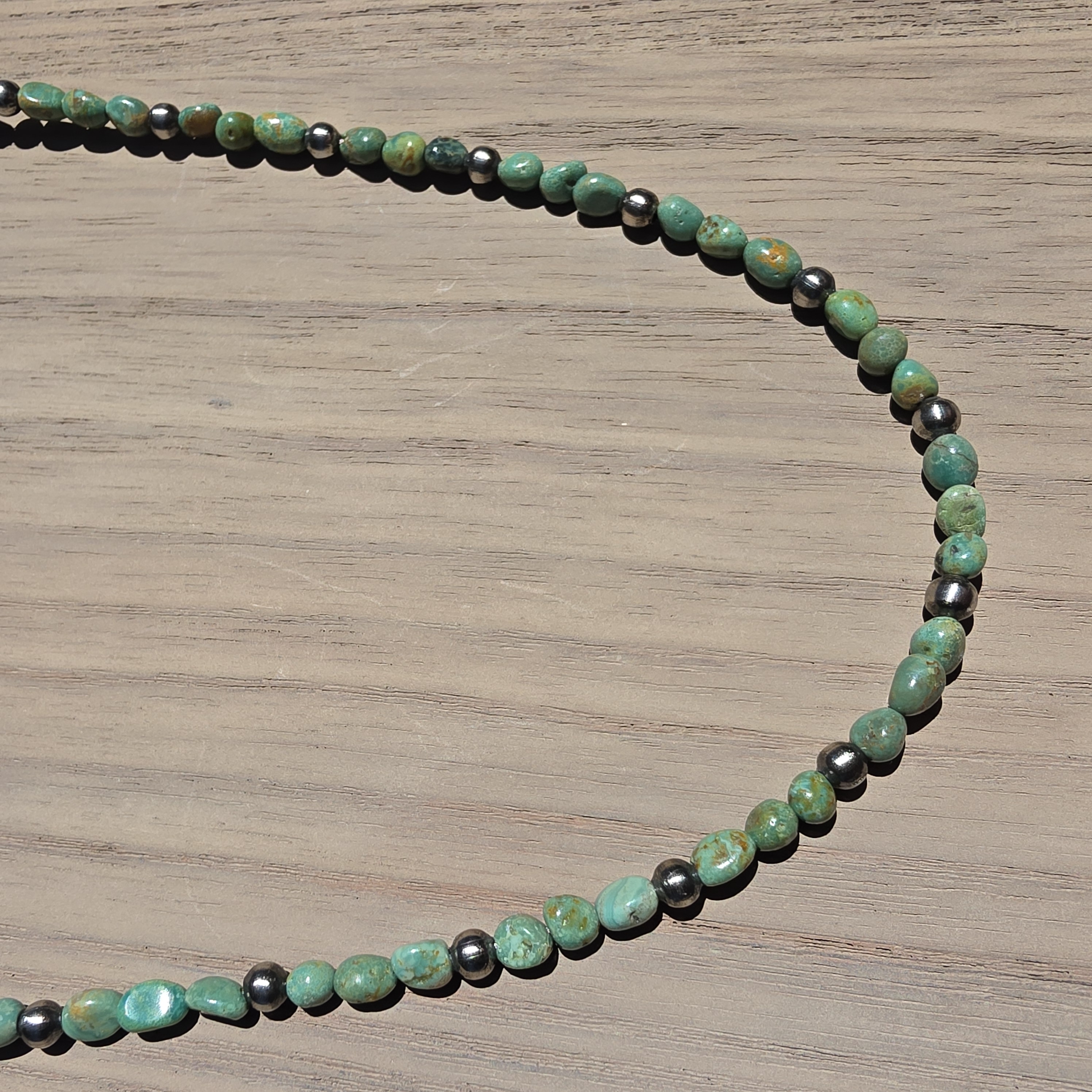
Turquoise is one of three December birthstones, alongside zircon and tanzanite. It is the oldest of the three by several thousand years, and the only one that was ever assigned a meaning before it was assigned a month.
It is also the traditional gemstone for an eleventh wedding anniversary. The symbolism there is friendship and enduring bond rather than passion, which makes it a more interesting gift than it first sounds.
Truth, throat, and the modern reading
In contemporary crystal and chakra practice, turquoise is linked to the throat chakra and therefore to communication, honest speech, and saying the thing you have been avoiding saying. This is a genuinely modern association — it does not appear in the Persian or Southwestern traditions — but it has become the most common reason people buy the stone today, and it sits comfortably alongside the older meanings rather than contradicting them.
Treat that as tradition and intention rather than medicine. It is a meaningful thing to wear a stone deliberately; it is not a treatment for anything.
Why turquoise is traditionally given, not bought
There is a persistent tradition, strongest in the Southwest, that turquoise carries more power when it is given than when it is bought for yourself. Some versions of it hold that a gifted stone protects the giver as well as the wearer.
Whether or not you put stock in it, it explains a lot about how turquoise has moved through the world for thousands of years — as a gift between friends, as a piece handed down, as something put on a child or a traveler by someone who wanted them safe. That is not a bad thing for an object to mean.
If you are buying it for yourself anyway: pick the stone you keep looking back at. Every tradition above agrees that the relationship between wearer and stone is the part that matters, and none of them say anything about who paid.
Making it last
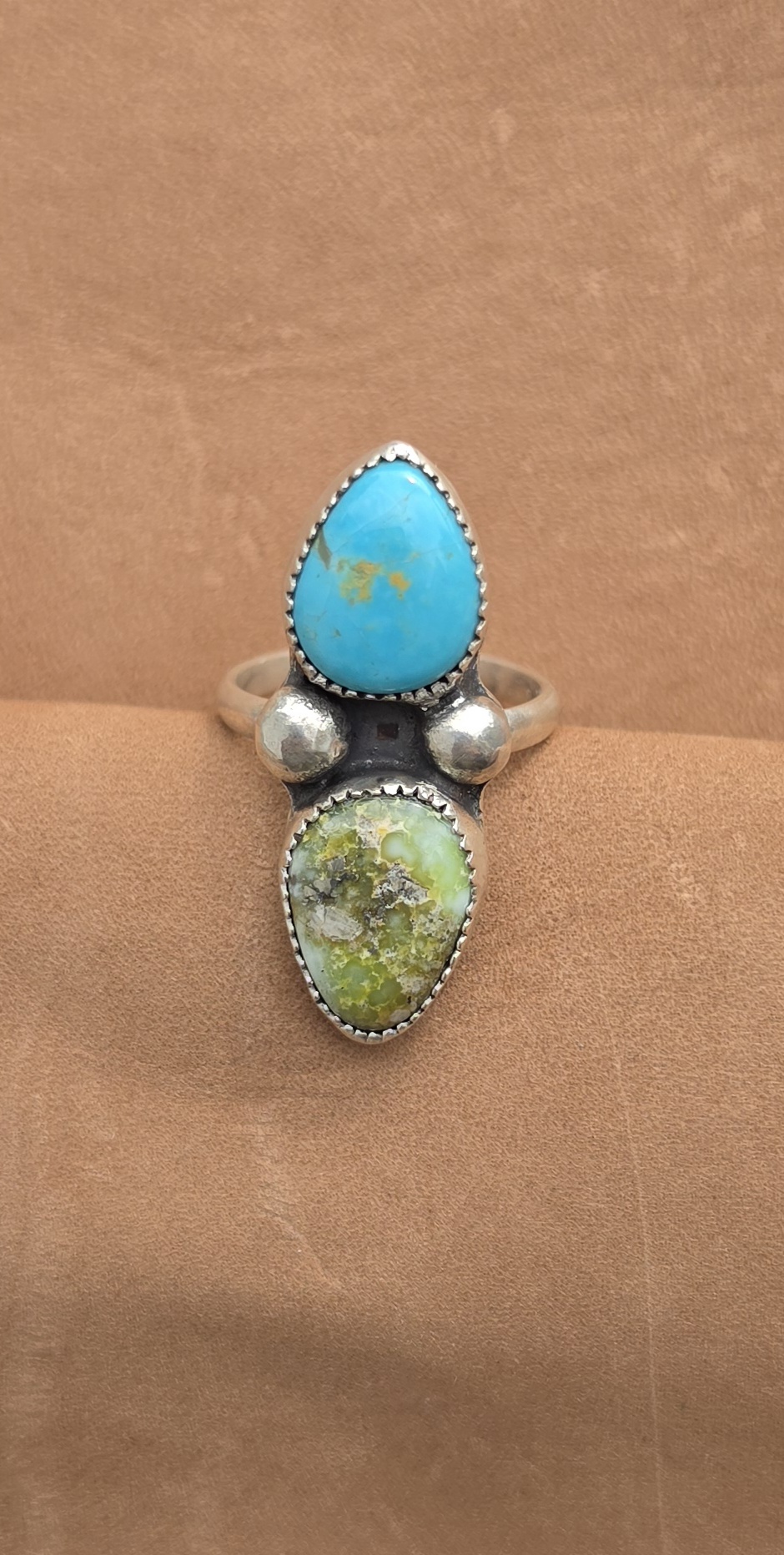
One practical note, since the meaning and the care are connected. Turquoise is soft and porous — roughly 5 to 6 on the Mohs scale, compared to 10 for diamond. Keep it away from lotion, perfume, and sunscreen, take it off before a pool, and never soak it or use a silver dip on a piece with stones in it. The stone that changes color to warn you is also the stone that will drink up whatever you put on your hands.
Wear it anyway. A turquoise piece that has gone slightly green over twenty years of daily wear is the most honest version of what this stone has always meant.
Frequently asked questions
What does turquoise symbolize?
Turquoise symbolizes protection, healing, and good fortune. Across Persian, Egyptian, and Native American traditions it is also associated with water, rain, and safe travel — meanings that appear independently in cultures that never traded with one another. In modern practice it is additionally linked to honest communication.
What does turquoise mean spiritually?
Spiritually, turquoise is most often described as a protective stone, particularly for travelers. In contemporary chakra practice it is associated with the throat chakra and therefore with clear, truthful speech. This throat association is a modern addition rather than part of the older Persian or Southwestern traditions.
Why is turquoise called the sky stone?
In the Southwest, turquoise is called the sky stone because Navajo, Zuni, Hopi, and Pueblo traditions describe it as a piece of sky that fell to earth. The name reflects both its color and its association with rain and water in an arid landscape.
Is turquoise a birthstone?
Turquoise is one of three birthstones for December, alongside zircon and tanzanite. It is also the traditional gemstone for an eleventh wedding anniversary, where it symbolizes friendship and lasting bonds rather than passion.
What does it mean when turquoise changes color?
Turquoise is porous and absorbs oils, lotions, and moisture from skin over years of wear, which causes a blue stone to gradually shift greener. Persian tradition read this color change as the stone warning its wearer of illness or danger. The observation was accurate; the cause is absorption rather than premonition.
Does turquoise have to be given as a gift?
There is a persistent Southwestern tradition that turquoise carries more power when given than when bought for oneself, with some versions holding that a gifted stone protects the giver as well as the wearer. It is a tradition rather than a rule, and it reflects how turquoise has historically moved between people as a protective gift.
What is the difference between blue and green turquoise?
The color comes down to chemistry — copper content pushes turquoise blue, while iron content pushes it green. Zuni tradition assigns blue to the sky and the father and green to the earth and the mother. Neither shade is more authentic, though sky-blue stones generally command higher prices on the market.
Where does the name turquoise come from?
The name comes from the French turquois, meaning Turkish stone. Persian turquoise reached Europe through Turkish trade markets, so Europeans named it after the middleman rather than the source. The Persian name, firuzeh, is related to the word for victory.
